
Exploring AI Scientists, the potential of synthetic chloroplasts, and Venture Café's momentum
The latest from ARIA, including thoughts from CTO Ant Rowstron on AI Scientists and a catch up with Creators in our Synthetic Plants programme.
What’s new at ARIA
News and opportunities
Discover funding in our new programmes:
In Sustained Viral Resilience, Programme Director Brian Wang is looking to create a new class of medicines – capable of providing durable, broad-spectrum protection against respiratory viruses – by engineering the innate immune system. Submit a concept paper by 10 November.
In Precision Mitochondria, Programme Director Nathan Wolfe is aiming to create a foundational toolkit to engineer the mitochondrial genome in vivo, empowering scientists to robustly investigate the link between mitochondrial health and disease. Full proposals open on 1 December.
Share feedback on our latest programme thesis, Universal Fabricators. Programme Director Ivan Jayapurna is proposing to harness advances in AI and molecular manipulation (biological and synthetic) to develop a ‘universal fabricator’ hardware-software platform for the production of hierarchical nanocomposites. Read it here.
Apply for pre-programme discovery funding in Trust Everything, Everywhere. To help inform our direction and build community, Programme Director Alex Obadia is looking to fund ~3-month exploratory projects with up to £20k each. Find out more and apply by 12 November.
Learn more about our AI Scientist call. We’re going to fund a series of exploratory projects to test how AI Scientist systems attempt the full research loop – read more from our CTO Ant below. Apply for funding by 14 November.
Join one of our developing programmes as a Technical Specialist:
Programmable Materials Processing: Ivan Jayapurna is looking for a technical generalist and builder with expertise in hierarchical materials. Apply by 9 November.
Population Genetics + Eco-evolutionary Dynamics: Yannick Wurm is looking for a population geneticist with a strong understanding of the complexity of ecosystem functions and dynamics. Apply by 16 November.
Cyber-Physical Multi-Agent Systems: Alex Obadia is looking for someone with deep foundations in mathematics, physics, or engineering, with an entrepreneurial, hacker-like mindset. Apply by 23 November.
Events
Join our Activation Partner, Nucleate UK, for Programming Next-Gen Crops. Register to join on 6 November.
Take part in AI for Science: Scientists to Builders. This summit is for anyone using AI to accelerate science, brought to you by Conception X and two of our Activation Partners: Renaissance Philanthropy and Pillar VC. Register to join on 10 November.
Find us in Scotland for our roadshow and Venture Café Edinburgh launch. We’ll be coming to Edinburgh on 20 November and Dundee on 21 November as part of our roadshow and our Activation Partner, Venture Café, are launching in Edinburgh on 20 November.
Secure your place at the UK’s first Vision Weekend. We’re partnering with the Foresight Institute to bring their flagship event to London in June: a three-day global gathering convening ~300 frontier academics, builders, entrepreneurs, funders, and activists to build better futures through science and technology. Get your early bird ticket for June 5 – 7 2026.

Why we’re exploring AI Scientists: Update #1
Over the coming months, Ant Rowstron, our CTO, will share updates on ARIA’s exploration of AI Scientists: autonomous systems that could transform how breakthrough research happens. This first entry from Ant explains why we’re doing this, what we’re testing, and why it matters:
A few weeks ago, I was at Bletchley Park for an ARIA workshop. Standing in front of EDSAC, the Bombe, Colossus – systems the UK built when the world demanded entirely new capabilities – I found myself thinking: are we at another one of those moments?
The technical shift
We’re seeing AI move from tools that assist human scientists (like AlphaFold optimising protein structure prediction) to systems attempting the full research loop: hypothesis generation, experimental design, execution in automated labs, data interpretation, iteration. That’s a fundamentally different capability.
If this works – and that’s still a big if – it could change what’s possible. Testing hypotheses at speeds humans simply can’t match. Spotting patterns we’d miss. Exploring research directions that would otherwise never get tried because there aren’t enough hours in the day.
The technical enablers are converging: frontier LLMs with improved reasoning, high-throughput automated lab infrastructure, access to structured knowledge at scale. But the integration challenges are real. Moving from ‘this works in a demo’ to ‘this reliably produces novel insights’ requires solving problems we don’t fully understand yet.
Can current systems actually handle experimental failure and adaptive redesign? Do they need human intervention at key decision points? What’s the real throughput on automated equipment versus what’s theoretically possible? There’s a lot of hype, but I’m not sure we know where the frontier actually is.
We need a deeper understanding of current capabilities; that’s why we’ve launched this funding call.
Testing both sides of the boundary
We’re looking to fund 5-6 organisations with working AI Scientist systems to tackle real problems over nine months. Each proposal needs two problems: one they’re confident they can solve, and one they expect to struggle with. We’re deliberately testing what these systems can reliably do now, and where they hit their limits.
What I’m watching for
A few questions particularly interest me:
Can they iterate when things fail? The most valuable outcome might be seeing a system formulate a hypothesis, run an experiment that doesn’t work, work out why it failed, then design a better experiment. That iterative learning – can they actually do it?
Can we solve the reproducibility problem? In computer science, reproducibility is deterministic: same inputs, same outputs. But in life sciences, results often can’t be reproduced, even with controlled variables. Is this biological stochasticity or because of untracked parameters? AI Scientists could conduct experiments with far greater precision – logging every variable and deviation – helping distinguish genuine biological variability from experimental noise. That alone would be valuable.
What about breaking down disciplinary walls? Biology labs, materials labs, chemistry labs operate independently. But what if you created one automated space with all that equipment and gave an AI Scientist access? Most of the exciting things in my career happened when I worked across disciplines. I don’t know what that looks like, but it might enable entirely new approaches.
These are genuinely open questions. The answers will inform not just ARIA’s strategy, but how the broader research community should think about engaging with these systems.
Being open-minded about capability
Scepticism is warranted — both technically and ethically. Current AI systems excel at pattern matching but can struggle with genuine causal reasoning. If they’re just interpolating from existing research to propose incremental variations, that’s useful but not transformational.
But here’s what I’ve learned watching coding tools evolve: the gap between ‘useful assistant’ and ‘can actually architect systems’ closed faster than most expected. Tools like Claude or Cursor today can do things that seemed impossible three years ago. A 20-year-old engineer using them can achieve in hours what took experienced teams days when I was building distributed systems at Microsoft.
I’m seeing similar early signals with AI Scientists. Not in hype, but in actual capability demonstrations. The question is whether that trajectory translates to scientific research, or whether research has fundamentally different challenges that will slow progress.
That’s what this exploration is about: generating evidence for informed decisions.
We’re calling this broader effort ‘AI for breakthroughs’: ARIA’s approach to understanding and directing AI-driven research toward transformational discoveries. As AI Scientists develop, learning how to interface with them effectively becomes as important as the systems themselves.
I’ll share what we find.
ARIA’s £3M AI Scientists funding call is open until 14 November.
Activation Partners: Venture Café UK gathers momentum
For the full potential of breakthrough science to be realised, it needs multiple pathways to the real world. That’s where our Activation Partners play a vital role – helping to create the conditions for bold ideas to thrive, building and connecting communities, and empowering those driving impact beyond the lab.
One of these nine Activation Partners is Venture Café Global Institute. With the ethos that isolation is the enemy of innovation, Venture Café’s mission is to connect innovators through high-impact programming, spaces, storytelling, and broad engagement.
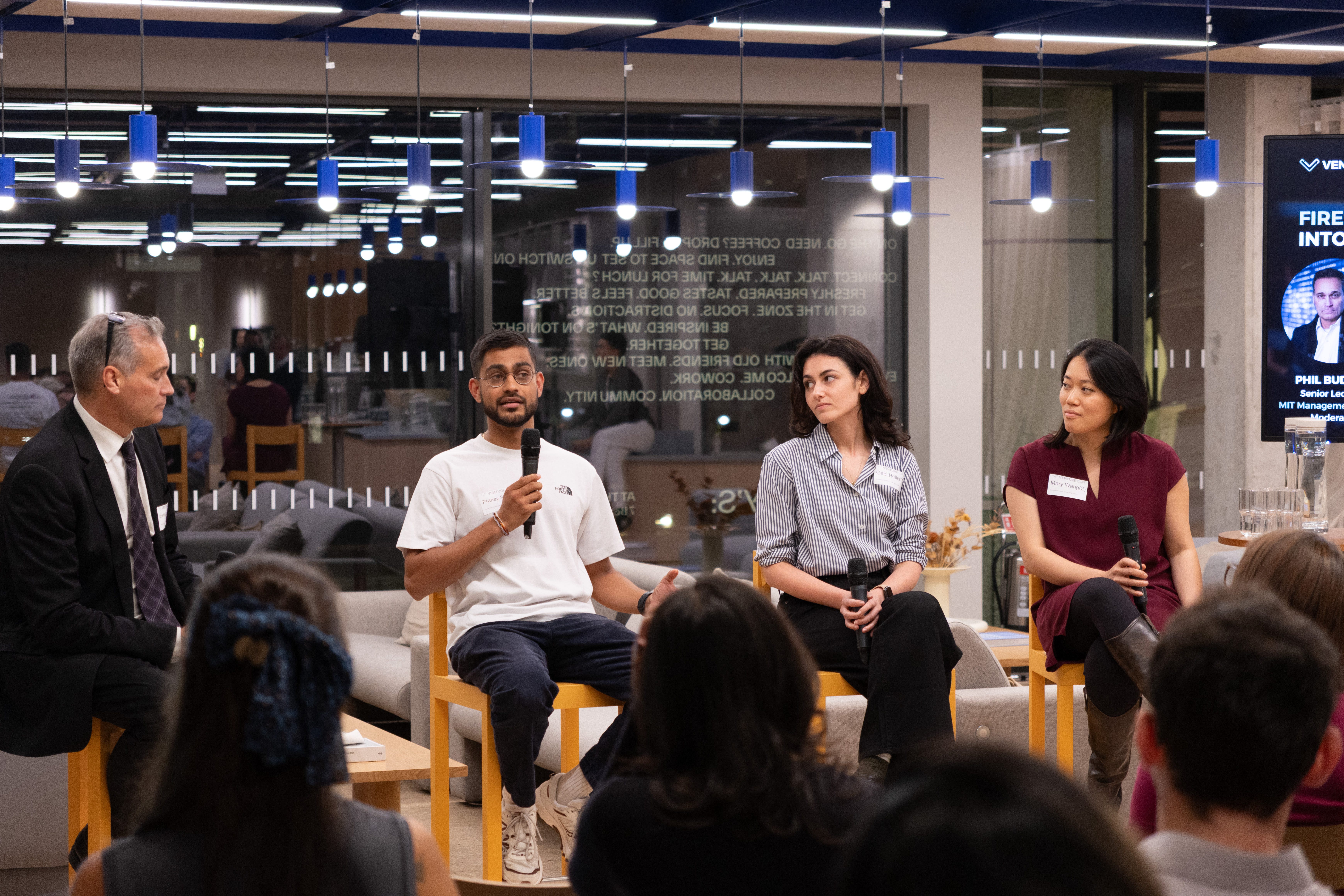
This year, as part of our partnership, Venture Café brought their global innovation Thursday Gatherings to the UK for the first time. Events in London have spanned the science and technology stack – diving into the likes of food security, AGI, longevity and climate – and have welcomed 2400 attendees across the first 12 Gatherings.
“It’s the fastest and most successful launch in our 16-year history,” says Mike Jackson, Head of Venture Café UK. “That’s a testament to both the hard work of the London team, the support of ARIA, our fellow Activation Partners, and the London science and entrepreneurship communities.”
These weekly events provide innovators, entrepreneurs, and community members a platform to exchange ideas, spark collaborations, and drive innovation across diverse fields. Hosted weekly in the same location, they’re non-exclusive and have Venture Café’s global network behind them – reaching beyond local ecosystems to connect people from all around the world. “The atmosphere at our events can also be partly credited to the behaviours we encourage, like no hard sales and being interested in the people you connect with,” says Mike. “Our name badges don’t include your job title or organisation or seniority. It forces people to connect at a human level, no scanning of badges looking for a potential investor or customer… it’s just two people at an event talking.”
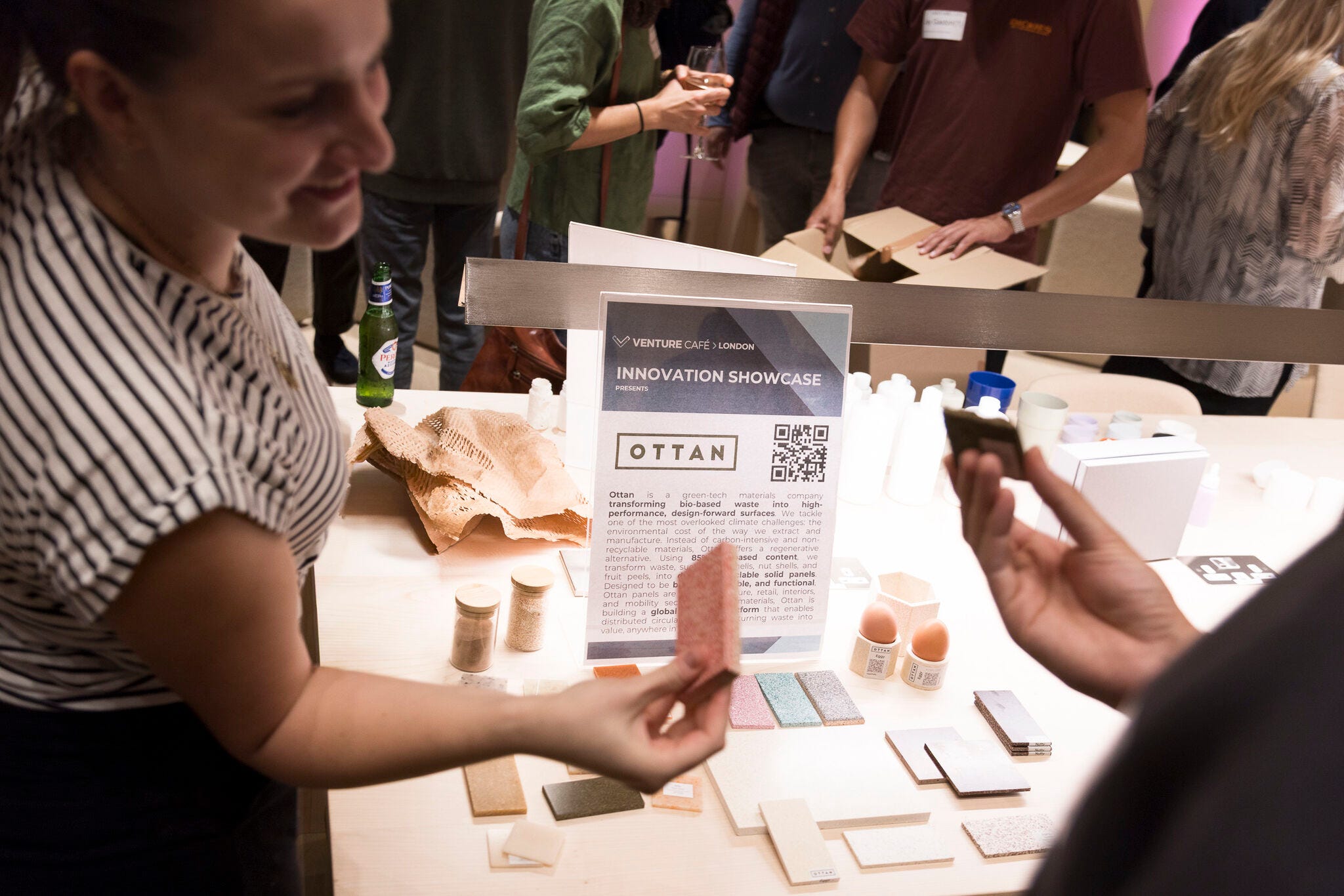
Building on this initial success in London, momentum is gathering across the UK – last week, Venture Café Manchester launched with 300 attendees present, and Venture Café Edinburgh is launching on 20 November. “It was always important that Venture Café wasn’t just a London or even a ‘Golden Triangle’ initiative, but reached and served the science community across the UK,” says Pranay Shah, ARIA Product Manager. The Venture Café team and ARIA chose Manchester and Edinburgh as the next expansion cities – both having strong science entrepreneurship foundations as well as easy reach to surrounding other hubs.


With a background in both academia and entrepreneurship, Claudia Cavalluzzo – Director of Venture Café Edinburgh – is determined to create the right environment for innovators. “Scotland is a vibrant place for founders, but there’s an opportunity to build the cohesiveness seen in other innovation hubs and I hope we can provide the connective tissue to help our ecosystem and innovators to thrive,” she says. “There’s so much talent, not just in tech but also in life sciences, creative industries and social businesses – our vision for Venture Café Edinburgh is to create a space for innovators of all kinds, no matter their background or idea stage.”
Venture Café UK is expanding their impact further by also rolling out their Connect model in a number of cities across the UK over the next year – a lighter touch approach where monthly meet-ups are delivered by local innovation organisations and powered by the Venture Café model. Four UK cities are in discussions to launch Connect gatherings over the next year. “I’m very optimistic for the future of Venture Café in the UK,” says Mike. “We can play a real part in both supporting new frontier science startups and scale-ups and maximising the talent and expertise across our universities and research institutions.”
Join Venture Café London’s Thursday Gathering tonight, in partnership with ARIA.
Sign up to attend Venture Café Edinburgh’s launch.
Building synthetic chloroplasts for sustainable crops: A Q&A with Creators at the Max Planck Institute of Molecular Plant Physiology
Daniel Dunkelmann and his team at the Max Planck Institute of Molecular Plant Physiology are aiming to design, build, deliver and maintain synthetic chloroplasts that are viable in a living plant. The goal is to pave the way for crops that are more productive, resilient, and sustainable.
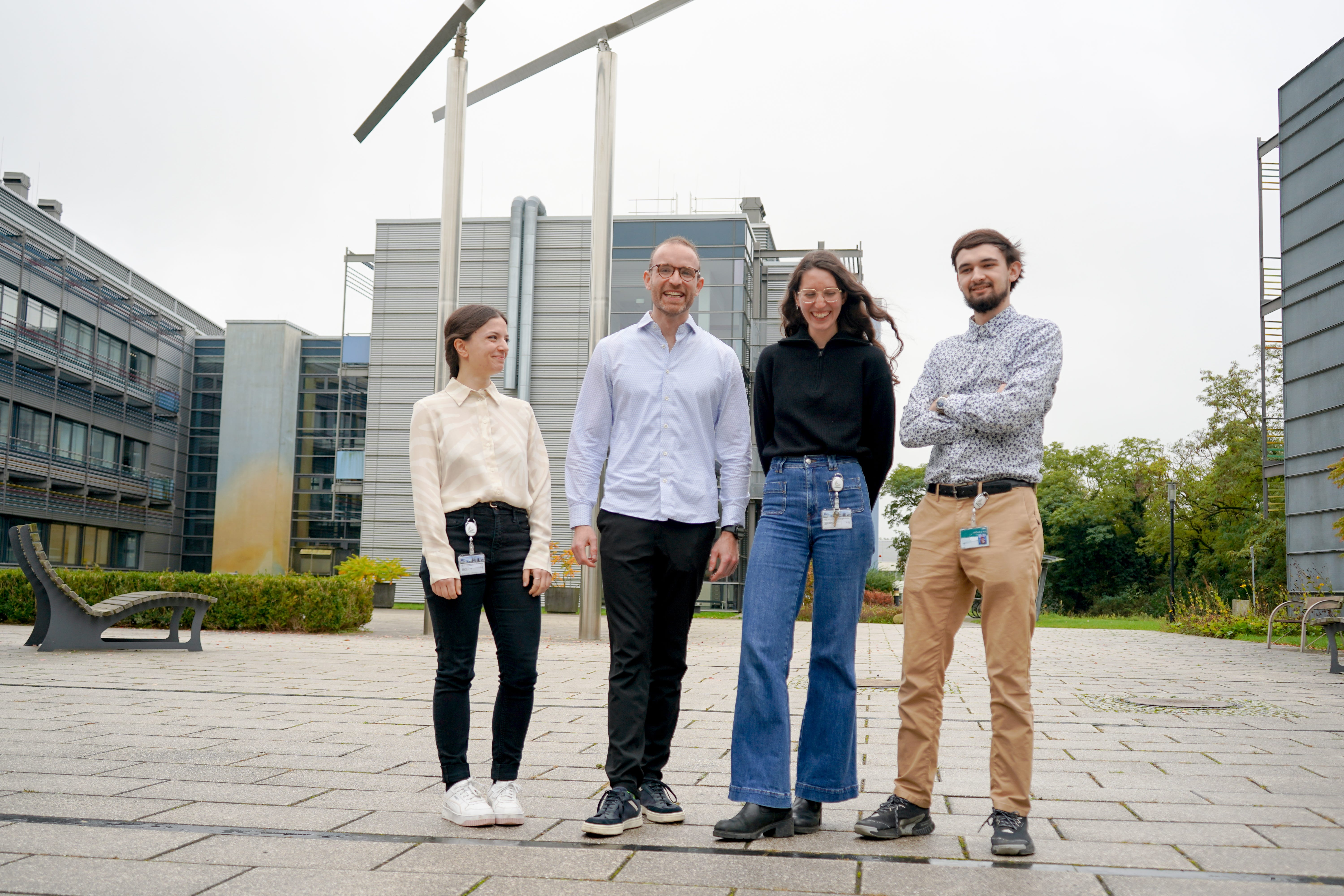
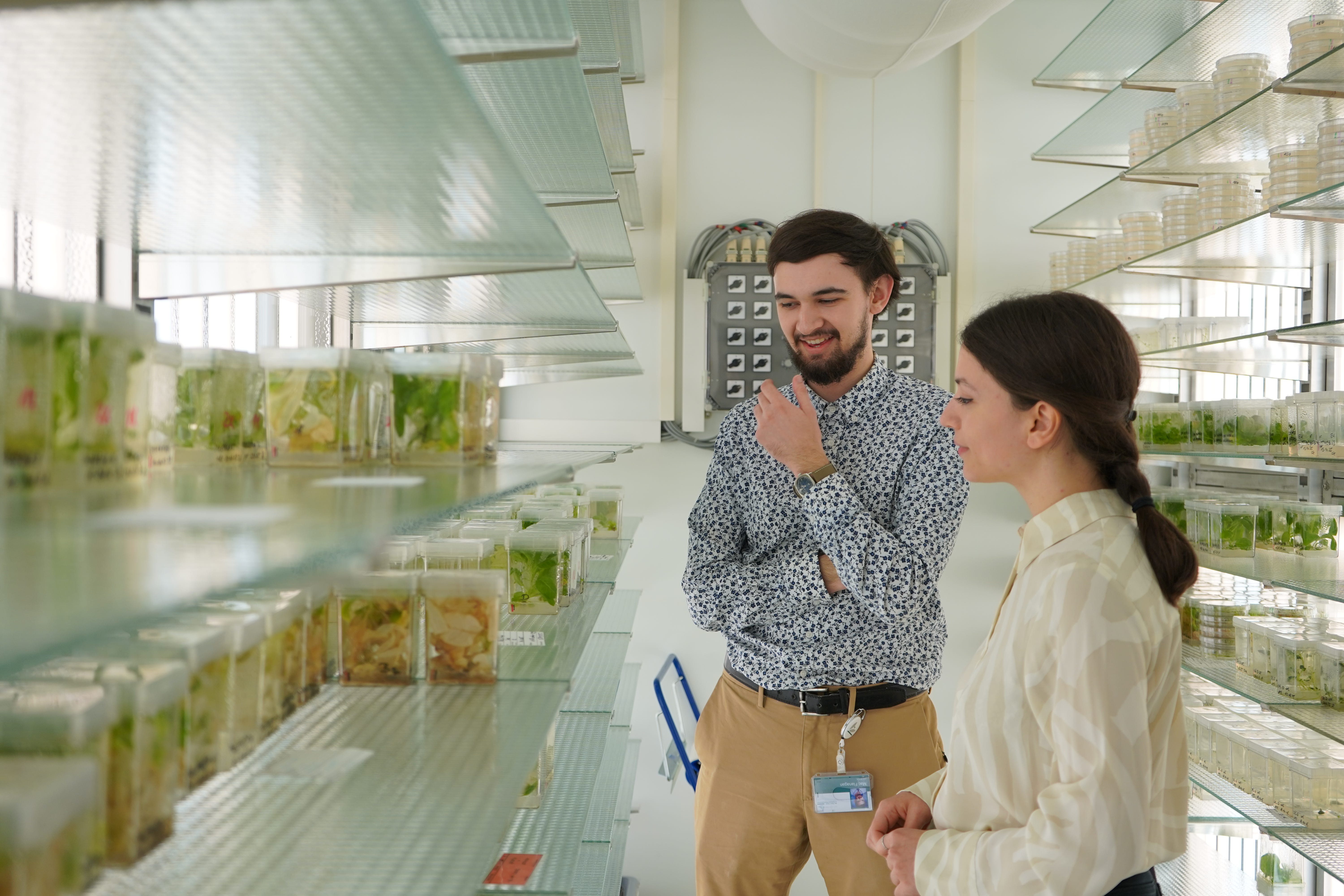
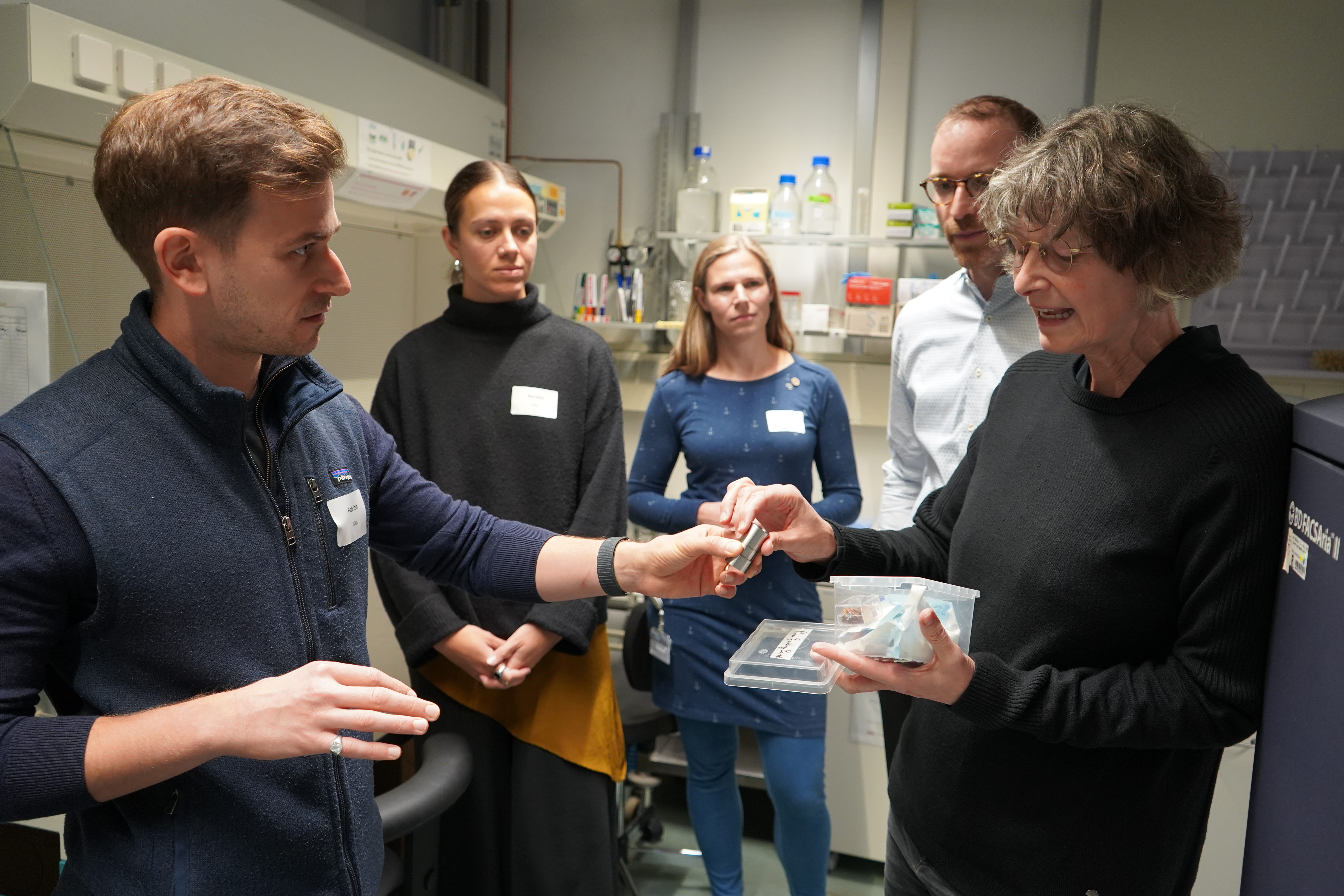
Funded as part of our Synthetic Plants programme, we caught up with Daniel and some of the SyncSol team (Catalina Brown Arancibia, Marianna Boccia, and Mac Flanagan) in Potsdam to see how their research is shaping up.
What are your roles within the team, and how did you all come to work in this field?
Daniel: I’m leading the effort here at Max Planck. I fell in love with the lab – the idea that you can think of something, build it, and hold the result. It’s tangible. With plants, your creation can literally grow in a greenhouse.
Catalina: I work as a technical assistant on this project, focusing specifically on plastid transfer, which involves grafting different plant species and ensuring the genetic material moves correctly between them. For me, working in plant synthetic biology is exciting because we have a chance at making a breakthrough that could transform food security, ultimately helping the most vulnerable in society.
Marianna: I’m a postdoctoral researcher working on reducing the size of chloroplast DNA in potato, aiming eventually for genetic code expansion. This would free up the genetic ‘letters’ to encode new, non-natural amino acids and give proteins novel functions. I got into plant science using CRISPR gene editing during my Master’s. Moving into synthetic biology felt like the next step, pushing beyond nature’s boundaries to engineer plants in new ways.
Mac: I’m a PhD student, primarily devising strategies to assemble and select for synthetic chloroplast genomes. Ever since I was a kid, it’s always been plants for me: their biodiversity, genetics, chemistry, it all fascinates me. Synthetic biology adds another layer; it combines so many disciplines, and it feels like the right place and time for making real advances in complex organisms like plants.
What are you currently working on?
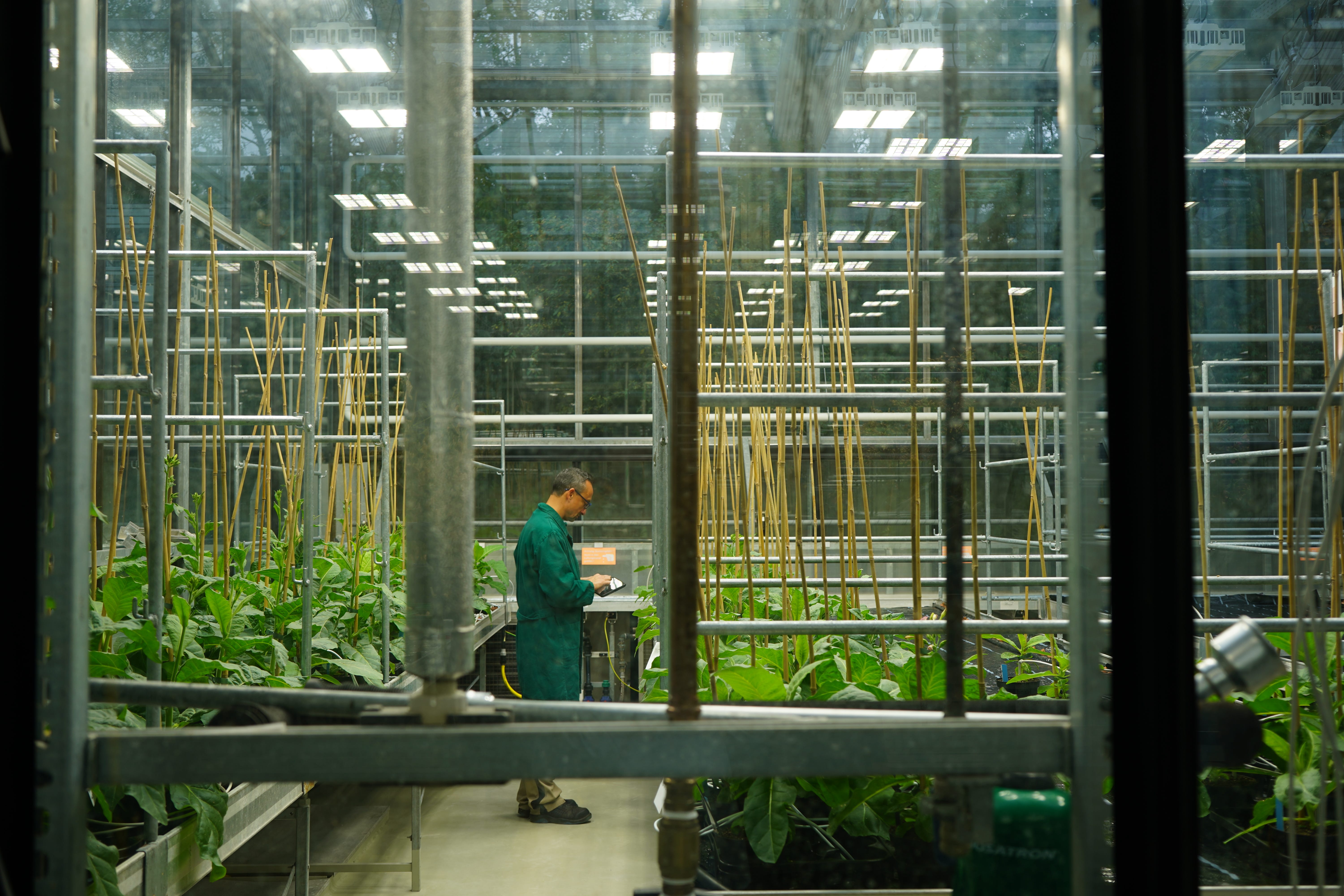
Daniel: We’re working to generate a universal chloroplast genome, one that’s designed to function across multiple plant species. We’re aiming to incorporate advanced features like genetic code expansion and genetic isolation, which is a bit like creating a firewall between synthetic and natural plants – and these features are only possible through complete synthesis of the chloroplast genome. Our core objectives are speed and scalability; we want to find the fastest model system to build the genome, develop reliable assembly methods, and then efficiently distribute these universal chloroplasts into various crops of major agronomic importance, where they can make a real impact.
We’ve partnered with two leading UK startups, Camena Bioscience and Constructive Bio, to help us overcome the major technical hurdles. The first challenge is in DNA synthesis: chloroplast DNA has characteristics, like being very adenine- and thymine-rich and repetitive, that make many synthesis companies simply refuse the work. Collaborating with Camena Bioscience helps build a strategically vital capability for DNA synthesis within the UK. The second challenge is in assembling these synthesised DNA fragments into the final large genome. Collaborating with Constructive Bio is allowing us to tackle this assembly far faster than we could alone.
What’s the most critical problem you need to solve to get this work off the ground?
Daniel: The biggest challenge is replacing a naturally evolved system with something designed by the human hand, which might initially be less optimised in function: chloroplasts are very good at mixing and matching similar DNA pieces, which we refer to as homologous recombination. Since our synthetic genome needs to perform the same functions, it will inevitably be similar to the native natural one, which could risk the unintended mixing of DNA pieces.
Mac: Imagine trying to build a new jigsaw puzzle, but the pieces keep getting mixed up with a very similar-looking existing puzzle. We need the chloroplast to assemble only our new puzzle.
Marianna: Exactly. We need to figure out how to suppress that mixing and successfully get the cell to adopt our synthetic version over the natural one. Overcoming that is the first major hurdle.
If the technology you’re trying to build is successful, what’s the most ambitious application you could imagine for it in ten to fifteen years?
Mac: Customisability. Imagine if farmers could order crops that tailored to their exact needs; they could specify the harvest time, level of disease resistance, and nutrient content. We could have synthetic nuclear and plastid genomes designed for any specific outcome.
Marianna: We could also make plants much more resilient to climate change while also boosting yield. We need crops that can sustain a growing population on a rapidly changing planet.
Catalina: Enhancing food security globally, especially for the communities most vulnerable to climate change. This technology could provide resilient food sources where they’re needed most.
Daniel: Perhaps edible medicines. It’s certainly ambitious, but imagine growing essential medicines directly in plants, bypassing complex manufacturing and distribution chains.
What do you wish more people knew about your research area?
Catalina: Let’s look at the current state of play: we know that pesticides are harmful to our health, but if we could create plants that need far fewer pesticides, wouldn’t our food be far more healthy and safe? It’s also crucial to understand that developing the end products takes a very long time, with extensive testing and checks. This rigorous process ensures safety; we aren’t just rushing things from lab to plate.
Mac: Humans have been selectively breeding plants for millennia – synthetic biology just accelerates this process and makes it more precise. Also, its applicability is incredibly broad – it’s a versatile toolkit, not limited to one industry.
Marianna: Exactly. Synthetic biology is a tool to support nature, helping plants adapt to climate change faster than natural evolution allows.
And finally, what book/film/TV show should people check out to understand your project or discipline more?
Catalina: A good analogy comes from the Netflix series Chef’s Table, which has an episode on Blue Hill Farm. They achieve novel results through creative farming – like breeding a new variety of squash for better flavour and nutrition, and including small amounts of red chilli in chicken feed to get red egg yolks. Humans have been safely ‘engineering’ nature for a long time, using creativity to achieve desired traits long before modern synthetic biology. It highlights that editing itself isn’t necessarily inherently risky.
Find out more about the Synthetic Plants programme.
F-Spec Corner: Recommended reads
ARIA’s inaugural cohort of Frontier Specialists (F-Specs) are a small, dedicated team with the mission to dramatically expand ARIA's technical surface area and sharpen the cutting edge of the science we’re funding.
Here are some of the pieces that F-Specs Alice Pettitt and Matt Burnett have been digging into this month:
Navigating protein landscapes with a machine-learned transferable coarse-grained model
Alice: Proteins aren’t static – they’re dynamic molecules in constant motion. Capturing this atomic dance is the goal of all-atom molecular dynamics simulations, a widely used approach for studying molecular motion. However, their computational demands are immense. CGSchNet is a graph neural network-based coarse-grained model that represents proteins using simplified beads and learns their interactions from all-atom simulations. It achieves simulation speeds several orders of magnitude faster than all-atom simulations while preserving near-atomistic accuracy in capturing folding and dynamics. The approach still faces challenges under different environmental conditions, but it points toward a future where AI-driven molecular dynamics lets us explore biological complexity at scale.
SimpleFold: Folding Proteins is Simpler than You Think
Alice: Researchers at Apple have developed SimpleFold, a lightweight AI model for protein structure prediction. Rather than using multiple sequence alignments and pairwise interaction maps like in AlphaFold2, SimpleFold employs flow matching models, a technique inspired by text-to-image generation, to learn the geometric symmetries of proteins directly from training data. This novel approach achieves approximately 95% of AlphaFold2’s accuracy but requires significantly less computational power, making it capable of running on high-end consumer hardware like an M2 Max 64GB Macbook Pro. If extended to multi-chain and dynamic systems, SimpleFold’s approach could pave the way for real-time protein modelling and design tools running on our everyday hardware.”
AI Resilience: Accelerating Civilisational Resilience in the Era of AI
Matt: Many commentators express concerns that advances in AI will disrupt human societies in undesirable ways. The authors of AI Resilience, Eddie Kembery and ARIA Technical Specialist Nora Ammann, take this conversation a few steps further introducing the concept of Endgame Thinking. Endgame thinking is a tool for strategic imagination to build resilient systems that can scale with AI progress, rather than be broken by it. A call to action to think about defensive capabilities that progress in AI should enable. In one of the case studies, on biosecurity, the threat of AI-designed bioweapons is mitigated by AI-driven protection from pathogens through predictive screening, spread suppression and coordinated local response. Endgame thinking could be a useful way to think about securing our capabilities in light of other transformational technologies, and is a welcome tool in conversations about AI’s impacts on humanity’s future.
Couldn't agree more; the potential of projects like the AI Scientist call is incrediblly exciting, though one can't help but wonder about practical implementation timelins for such ambitious undertakings.